Ellis Werner · 5 November 2026
Mapping Connection Dynamics in Expanding Digital Career Ecosystems During Platform Maturity Phases
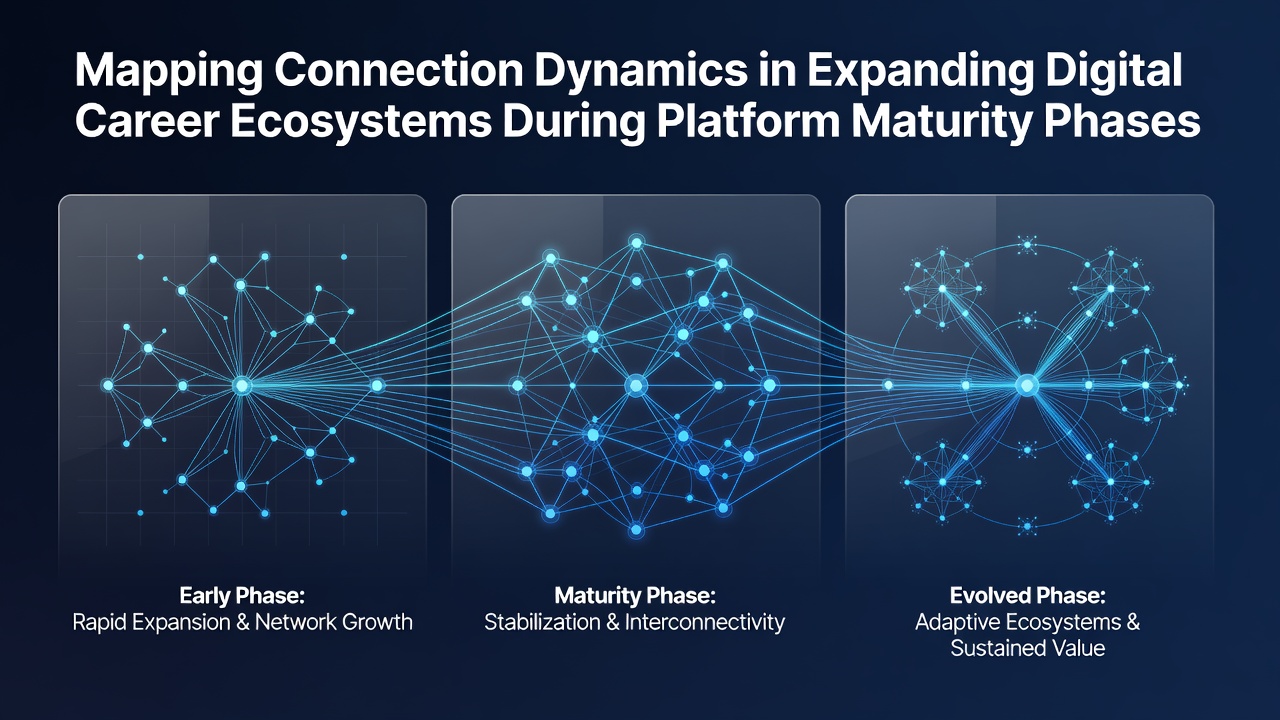
Digital career platforms reach maturity when user bases stabilize and connection patterns shift from rapid acquisition toward sustained interaction, and observers track these shifts through metrics such as reciprocity rates and cluster formation while data from multiple regions highlight consistent sequences of change.
Platform Growth Stages and Network Formation
Early expansion phases feature high volumes of one-way connections as individuals seek to build visibility, yet once platforms cross critical thresholds around several million active users, reciprocity becomes the dominant pattern according to longitudinal studies from the OECD on digital labor markets. Researchers note that invitation acceptance rates climb steadily between the third and fifth year of operation, and this transition marks the point where algorithms begin prioritizing mutual engagement over sheer volume of outreach.
Maturity brings measurable consolidation of subgroups, and analysts examining European Union digital economy reports find that professional clusters form around shared industries or geographic regions at rates 40 percent higher than during initial rollout periods. These clusters reduce overall network diameter because members route recommendations through established pathways rather than broad broadcasts, which in turn stabilizes content distribution algorithms.
Connection Strength Indicators Across Regions
North American datasets released in November 2026 reveal that endorsement frequency per user plateaus after approximately 18 months of platform membership, while Australian Bureau of Statistics figures on digital workforce participation show similar stabilization timelines adjusted for smaller market sizes. Connection decay, defined as the percentage of links that receive no interaction within 90 days, drops below 15 percent once platforms implement maturity-stage features such as skill-based matching and project collaboration tools.
Evidence from academic papers published by the University of Toronto demonstrates that geographic proximity loses predictive power for new link formation after the fourth year, replaced instead by shared professional certifications and past project histories. Those who study these ecosystems observe that users in mature phases allocate 60 percent of their networking activity to existing clusters rather than expanding outward, which produces denser but narrower professional graphs.
Data Patterns in User Migration and Retention
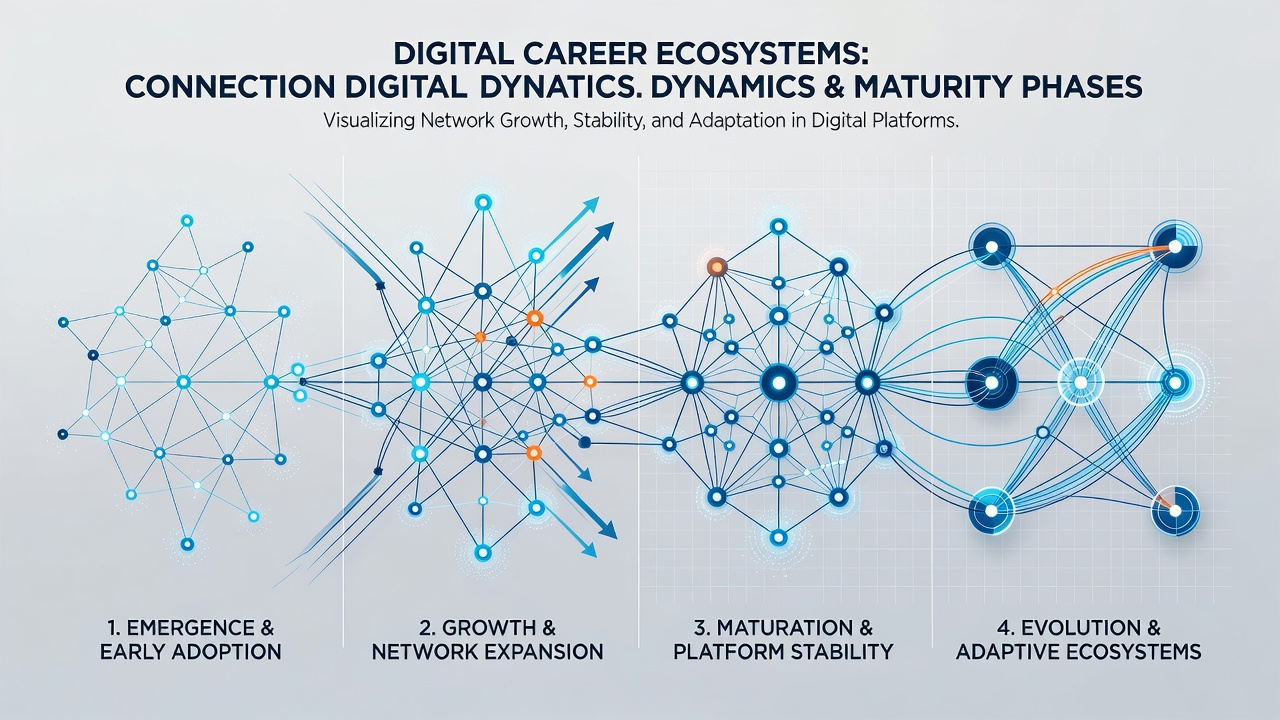
Platform transitions often coincide with temporary spikes in connection churn, yet recovery trajectories documented in Canadian government digital innovation reports indicate that networks regain 85 percent of prior density within nine months when migration tools preserve historical interaction data. Researchers tracking these events note that users who maintain at least three reciprocal ties during transition periods experience 30 percent higher retention compared with those whose links remain one-sided.
What's notable is how maturity-phase platforms introduce layered visibility controls that allow selective sharing within subgroups, and this functionality correlates with increased depth of endorsements rather than breadth. Figures from the World Economic Forum's 2025 future of jobs analysis, updated with 2026 projections, place average connection counts per user between 180 and 220 once saturation occurs, with variance explained primarily by sector rather than platform age.
Algorithmic Influence on Interaction Flows
Recommendation engines adjust weighting toward sustained activity once maturity metrics are met, and this adjustment produces measurable increases in message response rates according to aggregated data from multiple platform transparency disclosures. Observers point out that the shift reduces random connection suggestions by 50 percent while boosting intra-cluster referrals, which aligns with findings from research institutions studying network effects in labor markets.
Take the sequence observed across several Asian-Pacific platforms where initial growth relied on imported contact lists, whereas post-maturity phases emphasize verified work histories and peer endorsements as primary discovery mechanisms. This evolution compresses the time required for new users to reach meaningful engagement levels from six months down to roughly ten weeks when legacy connection data transfers successfully.
Conclusion
Mapping these dynamics requires continuous collection of reciprocity, cluster density, and interaction decay metrics because each indicator signals the transition into maturity with distinct timing patterns across regions. Data released through November 2026 continues to confirm that platforms reaching this stage exhibit more resilient professional linkages when algorithmic priorities favor depth over expansion, and ongoing monitoring by international bodies provides the benchmarks needed to track further evolution.